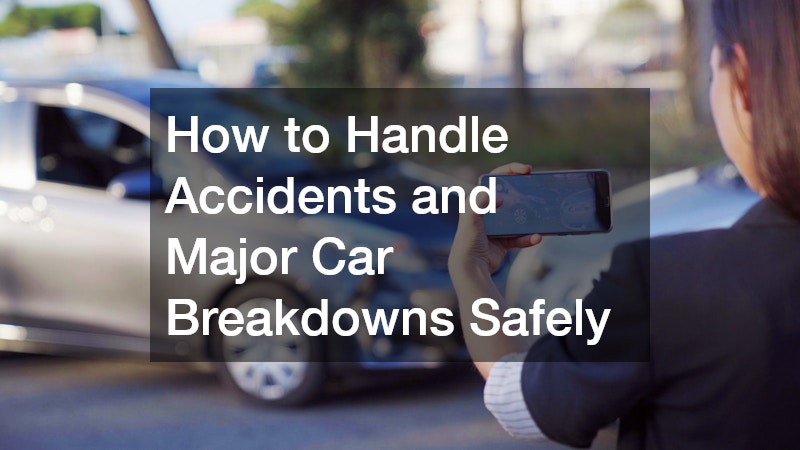
How to Handle Accidents and Major Car Breakdowns Safely

The reality of driving is that, eventually, you will likely face an unexpected vehicle emergency. Whether your car suddenly loses power while you are traveling at seventy miles per hour on a busy interstate, or another driver unexpectedly strikes your vehicle in a crowded intersection, the immediate aftermath is universally terrifying. Your body will react instantly: your heart rate will spike, adrenaline will flood your system, and your breathing will become shallow. This physiological response, known as the fight-or-flight reflex, is entirely normal and designed to keep you alive, but it can also severely cloud your judgment when you need it most.
Survival and safety in these high-stress moments do not come from luck; they come from thorough preparation and knowing exactly what actions to take in the crucial first five minutes after an incident occurs. When you have a predetermined plan etched into your mind, you can bypass the panic and move directly into execution mode.
This comprehensive guide is designed to equip you with the knowledge necessary to handle these situations with a clear head. We will walk through the immediate emergency actions you must take to protect human life, the protocols for securing your vehicle, the steps to diagnose mechanical and structural aftermath, and the preventative measures you should adopt to keep future emergencies at bay.
Take Immediate Action to Protect Yourself and Passengers
The moments immediately following an accident or mechanical failure are the most critical. Before you worry about the state of your vehicle, insurance deductibles, or traffic flow, your sole priority must be the preservation of human life.
-
Assess for Injuries and Call Emergency Responders First
Once the vehicle has come to a stop, take a deep breath to center yourself. Perform a quick physical check of your own body, moving your extremities and checking for pain or bleeding. Next, verbally and visually check on your passengers. If anyone is injured, unresponsive, or complaining of severe neck or back pain, do not attempt to move them unless there is an immediate threat to their life, such as a fire. Call 911 immediately. If the situation is a breakdown without injuries and your car is safely off the road, look up the non-emergency dispatch number for the local highway patrol or police department to report the hazard.
-
Create a High-Visibility Safety Perimeter
Other drivers are moving fast and are often distracted. You must make your vehicle as visible as possible, as quickly as possible. Immediately activate your hazard warning lights. If it is dark, raining, or foggy, turn on your interior dome lights to make the cabin visible. If it is safe to briefly exit the vehicle, deploy reflective warning triangles or LED road flares. Place the first triangle about 10 feet behind your car, the second about 100 feet back, and the third roughly 300 feet back to give approaching drivers ample time to merge away from you. While you wait for roadside assistance to arrive, your primary job is to ensure other motorists do not crash into your stationary vehicle.
-
Evaluate Your Surroundings Before Exiting the Cabin
One of the deadliest mistakes drivers make is stepping out of their vehicle on a busy highway to inspect the damage. If your car is stranded in an active traffic lane or on a narrow shoulder with cars flying by at highway speeds, the safest place for you is securely buckled inside your vehicle. The metal frame, airbags, and crumple zones offer far more protection than your physical body standing on the asphalt. Data collected from national towing companies shows that secondary accidents—where a pedestrian is struck after an initial breakdown—are shockingly common and frequently fatal. Only exit the vehicle if you are on a wide, quiet shoulder, or if remaining in the car poses an imminent danger.
Safely Relocate and Secure Your Vehicle
If your vehicle is still operational, or if it is dying but still has momentum, your next step is to remove the hazard from the flow of traffic.
-
Coast to the Right-Hand Shoulder Whenever Possible
If your engine suddenly dies on the highway, do not panic and slam on the brakes. You need to harness the remaining momentum to get to safety. Take your foot off the accelerator and use your turn signal. Check your mirrors and gracefully navigate across the lanes toward the right-hand shoulder. Be aware that without engine power, your power steering and power brakes will fail. The steering wheel will feel incredibly heavy, and the brake pedal will become stiff. You will need to use strong, deliberate physical force to steer and brake, but the car is still controllable.
-
Keep the Steering Wheel Straight and Engage the Parking Brake
Once you have successfully navigated to the shoulder or a nearby parking lot, securing the vehicle is paramount. Turn your steering wheel away from the road if you are facing downhill, or toward the road if you are facing uphill, so that if the car rolls, it hits the curb rather than rolling into traffic. Shift the car into park (or leave it in gear if you drive a manual transmission) and firmly engage the emergency parking brake. This is especially vital if you have broken down on an incline or a soft, muddy shoulder where the vehicle’s weight could cause it to shift unexpectedly.
-
Communicate Clearly with Dispatchers
When you call for transport, clarity is essential. Dispatchers need exact information to find you. Take note of your surroundings: look for mile markers, exit signs, prominent landmarks, or use the GPS coordinates on your smartphone. Clearly describe the make, model, and color of your vehicle, and specify the nature of the problem. Relying on vetted local towing services that know the regional highways well can often result in a much faster response time than calling a national hotline. Additionally, always confirm the name of the towing company dispatched to you by the police or your insurance provider. Predatory drivers sometimes monitor police scanners and will arrive at accident scenes to hook up your car, only to charge exorbitant release fees later.
Navigate Internal Mechanical Failures Post-Incident
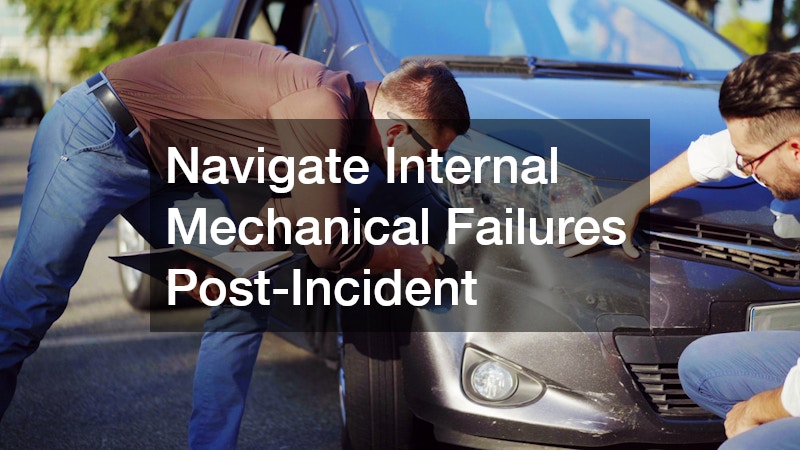
Understanding what went wrong under the hood can prevent you from making a bad situation significantly worse. Mechanical failures require a disciplined approach to avoid causing catastrophic, irreversible damage to the vehicle’s drivetrain.
-
Identify Critical Dashboard Warning Lights Immediately
Your dashboard is designed to communicate the severity of an issue through color coding. A yellow or amber light, such as the standard check-engine light, usually indicates a malfunction that needs attention soon, but it does not necessarily mean the car will explode if you drive it to the next exit. However, a flashing yellow light, or any red light—particularly the oil pressure warning or the engine temperature warning—means you must pull over and shut off the engine immediately. Continuing to drive with a red temperature light means the engine is actively overheating, and the internal metal components are expanding and warping.
-
Never Attempt Complex Under-the-Hood Fixes on the Highway
The side of a busy interstate is not a mechanic’s garage. Opening the hood on a narrow shoulder puts you at risk of being sideswiped. Furthermore, if your car is overheating, opening the radiator cap can cause pressurized, boiling coolant to spray onto your face and arms, causing severe third-degree burns. Never attempt to jack up a vehicle on a soft, slanted shoulder, as the jack can easily slip, crushing anyone underneath. Trying to force a dying, overheating vehicle to limp all the way home instead of pulling over can turn a minor cooling system fix into a catastrophic failure requiring a complete car engine repair.
-
Recognize the Smells and Sounds of Drivetrain Failure
Your senses are excellent diagnostic tools. A sweet, syrupy smell often indicates a coolant leak, while a thick, acrid burning smell can mean oil is dripping onto the hot exhaust manifold. If you smell burning friction material, your brakes or clutch may be failing. Listen carefully: a loud knocking sound from the front of the car suggests internal bearing failure, while high-pitched whining or violent shuddering when accelerating points toward drivetrain issues. Slipping gears, hesitation to shift, or a puddle of thick red fluid under the vehicle often dictates the need for comprehensive auto transmission repair.
Address Exterior and Structural Integrity Concerns
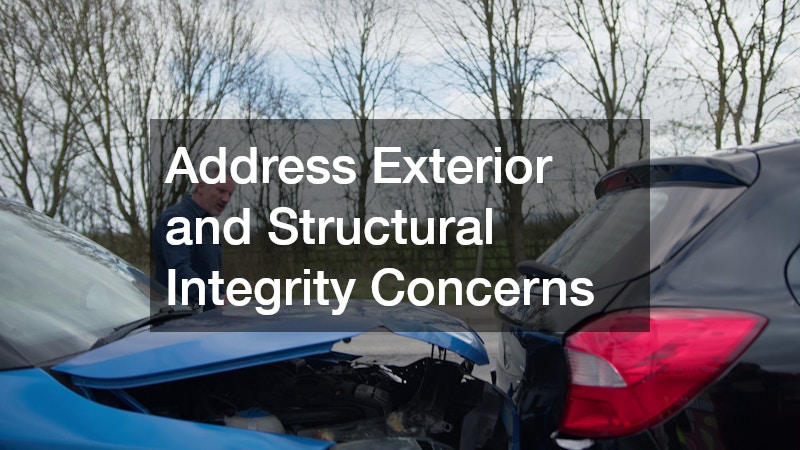
Following an impact, even a seemingly minor one, the structural integrity of your vehicle must be thoroughly evaluated before you decide if it is safe to drive away from the scene.
-
Check for Hazardous Fluid Leaks Before Restarting
If you have been in a collision, do not blindly turn the key in the ignition. Safely kneel and look beneath the undercarriage. If you see water dripping on a hot summer day, it is likely just condensation from the air conditioner. However, if you see a steady drip of iridescent fluid, thick brown oil, or smell the overpowering odor of raw gasoline, do not attempt to start the car. A ruptured fuel line paired with a spark from the ignition system can cause the vehicle to catch fire in seconds.
-
Do Not Drive With Compromised Safety Features
A vehicle must meet certain safety standards to be legally and safely operated on public roads. If an accident has shattered your headlights or taillights, driving at night becomes incredibly dangerous and illegal. If the hood is crumpled or the latch is bent, the wind resistance at highway speeds can cause the hood to fly up, completely shattering your windshield and blinding you. A minor scrape or a small dent in a door panel may only need basic auto body repair, which is primarily cosmetic and won’t affect the drivability of the car. However, safety mechanisms must be flawless.
-
Understand the Hidden Dangers of Minor Fender Benders
Modern vehicles are designed differently than cars built forty years ago. Today, a car’s exterior is designed to crumple and absorb the kinetic energy of a crash so that the energy does not transfer to the passengers inside. This means that even a low-speed fender bender can cause unseen, devastating damage to the framework beneath the plastic bumper cover. Radar sensors for cruise control, backup cameras, and airbag deployment modules are often housed in the bumpers and quarter panels. Always seek professional auto collision repair diagnostics after an impact to ensure your vehicle’s frame is straight and that your airbags will deploy correctly if you get into a second accident.
Prevent Future Emergencies Through Rigorous Maintenance
The absolute best way to handle a roadside emergency is to prevent it from happening in the first place. Vehicles are complex machines that require consistent, preventative upkeep to remain reliable and safe.
-
Listen for Unusual Sounds Before They Become Highway Emergencies
Cars rarely fail without warning; they usually spend weeks giving you auditory clues that something is wrong. Pay attention to how your car sounds with the radio turned off. If you hear a high-pitched squealing when you press the brake pedal, the wear indicators on your brake pads are telling you they are dangerously thin. If that squeal turns into a deep, metallic grinding noise, the pads are completely gone, and metal is actively destroying your brake rotors. This drastically increases the distance it takes your car to stop. Scheduling a routine brake service at the first sign of a squeak is drastically cheaper and infinitely safer than rear-ending another vehicle at a stoplight because your car simply could not physically stop in time.
-
Check and Replace Your Vital Fluids Seasonally
Fluids are the lifeblood of your vehicle. Every season, take ten minutes to check your oil level via the dipstick, ensuring it is at the correct level and amber in color, not sludgy and black. Check the coolant reservoir to ensure the engine has enough thermal protection for both freezing winters and boiling summers. Do not forget the power steering and brake fluids; if brake fluid absorbs too much moisture from the air, it can boil during heavy braking, leading to sudden and total brake failure on steep downhill descents.
-
Do Not Ignore Factory Mileage Milestones
When you purchase a vehicle, the owner’s manual outlines a strict maintenance schedule, typically broken down into 30,000, 60,000, and 90,000-mile intervals. These are not suggestions; they are engineering requirements designed to replace parts just before they are statistically likely to fail. Replacing timing belts, spark plugs, and water pumps on schedule prevents highway breakdowns. Furthermore, fluid breaks down under intense heat and friction. Having a professional perform a regular auto transmission service, which includes flushing old, burnt fluid and replacing the internal filters, is the absolute best way to ensure your gears continue to shift smoothly and reliably when you need to merge aggressively into fast-moving highway traffic.
Document the Scene and Manage the Aftermath
Once the immediate danger has passed, no one is injured, and the vehicles are secured out of traffic, you must pivot to protecting yourself legally and financially. Proper documentation at the scene can make the difference between a smooth insurance claim and a nightmare of disputed liability.
-
Take Thorough Photos from Multiple Angles
Before any vehicles are moved (if it is safe to leave them in place briefly), document the scene extensively. Use your smartphone to take wide shots that show the entire intersection, the position of the cars relative to the lane lines, and any relevant traffic signs or signals. Next, take close-up photos of the damage on all vehicles involved, not just your own. Crucially, take clear pictures of the license plates of every vehicle involved, just in case a driver decides to flee the scene before the police arrive.
-
Gather Contact Information from Witnesses and Drivers
Do not rely on the police to gather all the necessary contact information. Speak to the other drivers and politely request to see their driver’s license and insurance card. Take a photo of both documents. If there are bystanders or other motorists who stopped to help and witnessed the crash, ask for their names and phone numbers. Independent witnesses are incredibly valuable to insurance adjusters when liability is being disputed. When law enforcement arrives, be sure to ask the responding officer for their name, badge number, and the incident report number so you can obtain a copy later.
-
File Your Reports Promptly and Factually
When speaking to the police and, subsequently, your insurance company, stick strictly to the objective facts. State exactly what you saw, what direction you were traveling, and what happened. Never prematurely apologize or admit fault at the scene, as you do not have all the facts or the vantage point of the other driver. Let the evidence and the police report dictate liability. File your claim with your insurance provider as soon as you get home; delays in reporting can sometimes give insurance companies grounds to deny a claim or complicate the investigation.
Conclusion
Experiencing a major vehicle breakdown or a collision is an incredibly stressful event that disrupts your day, threatens your safety, and tests your composure. However, by accepting that these events are a normal, albeit unfortunate, part of driving, you can prepare yourself to handle them with authority.
The core takeaway is that human safety must always supersede vehicle preservation. Whether you are coasting a dead car to the shoulder or setting up flares in the dark, your methodical actions in the first few minutes dictate the safety of everyone involved. Keep a clear head, respect the dangers of active roadways, and never underestimate the power of being highly visible to other drivers.
Do not wait for a disaster to strike before you prepare. Build a roadside emergency kit for your trunk today, complete with reflective triangles, a first aid kit, a heavy blanket, a flashlight with extra batteries, and a basic toolset. Maintain your vehicle diligently, and drive with the confidence that if the worst does happen, you possess the exact knowledge required to protect yourself, manage the aftermath effectively, and get back home safely.